
Marketing Implications of the FDA’s Cell & Gene Therapy Guidance Updates
How Regulatory Shifts Should Shape Your Messaging, Targeting, and Positioning
Jeff Briganti
8/19/20252 min read
When the FDA changes the rules, your marketing needs to change with them.
The last guidance update came in November 2024 with draft titled, “Frequently asked Questions—Developing Potential Cellular and Gene Therapy Products.” Further guidance is expected later this year.
These updates aren’t just compliance checkpoints—they’re market signals. They redefine what therapy developers will prioritize, what risks they will tolerate, and which CDMOs will rise to the top of their shortlists. If you’re still running the same campaigns you launched six months ago, you may already be out of sync with the buyers you want most.
Why Guidance Updates Matter Beyond the Regulatory Team
For cell and gene therapy CDMOs, FDA guidance shapes buying criteria. A shift in CMC expectations, comparability standards, or clinical data requirements instantly changes how developers evaluate partners. Your marketing needs to:
Reframe technical expertise in the language of current regulatory priorities.
Signal awareness and readiness before prospects ask the question.
Reinforce risk reduction as a core part of your value proposition.
The CDMOs that speak to the new reality first gain a credibility advantage that laggards can’t make up later.
Translating Regulatory Shifts into Marketing Strategy
1. Update Messaging to Match the New Compliance Landscape
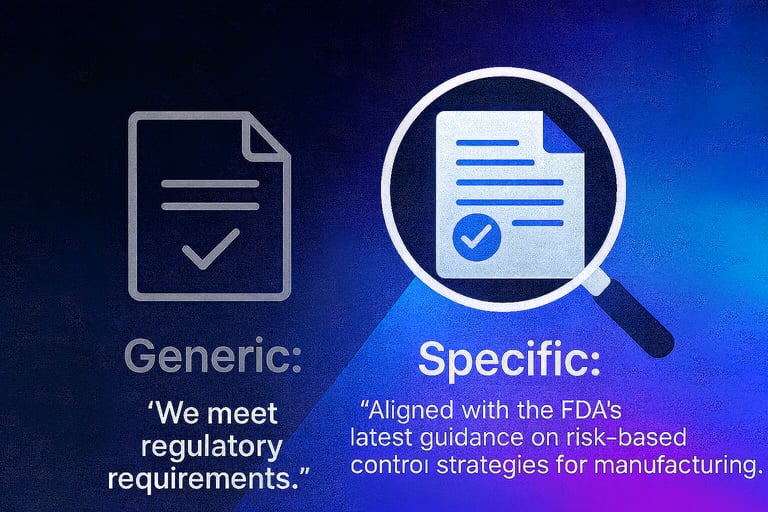
Then: “We can help you meet regulatory requirements.”
Now: “We align with the FDA’s latest guidance on [specific aspect—e.g., comparability protocols or potency assays].”
Specificity proves you’re not just compliant—you’re proactive.
2. Target Buyers Feeling the Most Pressure
Small and mid-size developers with limited in-house regulatory resources.
Late-preclinical and early-clinical programs scrambling to meet updated IND or BLA expectations.
Companies recovering from FDA feedback that requires additional manufacturing or analytical work.
3. Position Yourself as a Partner, Not Just a Vendor
Show how you interpret and apply guidance, not just follow it.
Highlight case studies where your expertise accelerated regulatory readiness.
Offer joint workshops or consultations that bridge regulatory and technical planning.
Making Regulatory Awareness a Marketing Asset
Fast adaptation beats slow perfection. The CDMOs that quickly integrate updated guidance into collateral, webinars, and sales conversations demonstrate agility—a trait buyers associate with lower risk and higher partnership value.
Practical steps:
Add an “FDA Guidance Watch” sidebar to newsletters.
Record SME commentary videos within two weeks of major updates.
Build sales enablement slides comparing “old” vs. “new” expectations.
Bottom Line
The FDA’s latest cell and gene therapy guidance updates don’t just affect your QA and regulatory teams—they reshape the market you’re selling into. The CDMOs who adjust messaging, refine targeting, and sharpen positioning now will own the next wave of opportunities.
Regulation changes the game. The smart players make it part of their pitch.
Want help crafting stories that resonate?
Let’s co-author your next chapter. Contact Jeff Briganti
Contact Us

Driving lead generation and conversion for CGT CDMOs with strategic marketing solutions.
Services
Project-Based Marketing
Part-Time Support
Fractional Leadership
Temporary Full-Time
Expertise
Lead Generation & Conversion
CGT CDMO Marketing
Digital Transformation (SEO)
Go-to-Market Strategy