
RNA’s Rollercoaster: From Baby KJ to Funding Cuts
Why It Means for CDMOs
Jeff Briganti
8/11/20252 min read
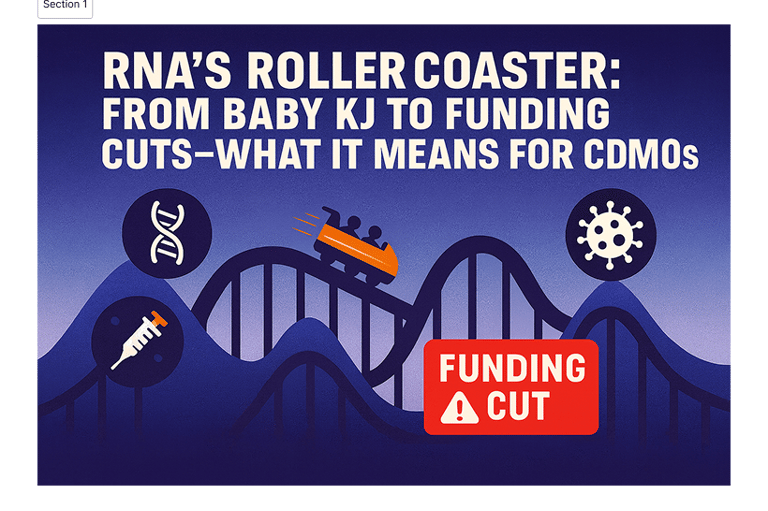
The RNA therapeutics and vaccine space is whipsawing between historic scientific wins and disruptive policy reversals. As RNA-delivered CRISPR technologies make headlines and mRNA cancer drugs attract big-name investors, U.S. funding pullbacks are casting a long shadow. CDMOs must decide now how to adapt—because the ground is shifting beneath their feet.
Recent Successes
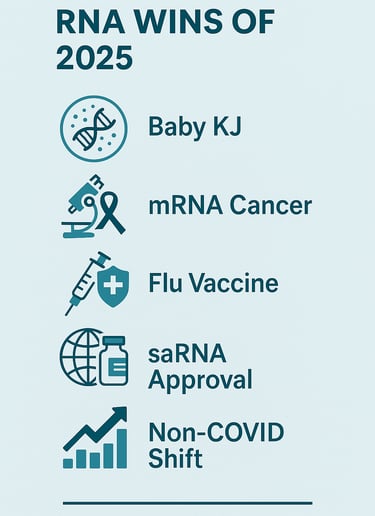
CRISPR milestone: In 2025, Baby KJ became the first patient cured of a rare genetic disorder using in vivo CRISPR delivered via lipid nanoparticle-encapsulated RNA—a major leap in precision medicine and RNA-based gene editing.
Strand Therapeutics closed a $153 million Series B to develop programmable mRNA cancer therapies, with backing from Regeneron, Lilly, and Amgen.
Moderna’s mRNA flu vaccine (mRNA‑1010) showed efficacy in adults 50+, with strong Phase 3 results prompting investor optimism.
Arcturus’s self‑amplifying COVID-19 vaccine (Zapomeran) received regulatory approval in Japan and the EU.
~70% of active mRNA vaccine trials now target non-COVID indications—from oncology to immune disorders—signaling RNA’s mainstream adoption.
This has drawn harsh criticism from scientists and public health officials, who warn it could delay pandemic preparedness and discourage innovation.
Technological hurdles remain: RNA’s instability, delivery limitations, and degradation risks still constrain its therapeutic potential—especially in extrahepatic targeting and systemic delivery.
Public perception risks: Political pushback could reignite skepticism around RNA—affecting adoption and clinical trial enrollment, particularly in the U.S.Public perception risks: Political pushback could reignite skepticism around RNA—affecting adoption and clinical trial enrollment, particularly in the U.S.
Why This Means for CDMOs
In the Short Term:
Spike in oncology and CRISPR-related programs: Expect a rise in demand for lipid nanoparticle (LNP) formulation, precision delivery, and analytics—especially for non-viral gene editing tools like RNA-delivered CRISPR.
Private funding replaces public projects: As U.S. government contracts dry up, CDMOs must pivot toward commercial biotech, big pharma, and international clients to fill the gap.
In the Long Term:
Platform complexity will drive differentiation. CDMOs that can support multi-modal RNA platforms—mRNA, saRNA, circRNA, and RNA-delivered gene editing—will emerge as strategic partners.
The delivery frontier becomes the new battleground. Expertise in developing scalable, targeted delivery systems for muscle, brain, and immune cells will become a core differentiator.
Policy divergence creates regional dynamics. Global CDMOs or those with APAC/EU partnerships may find it easier to sustain growth if U.S. regulatory and funding volatility continues.
Bottom Line
The success of Baby KJ and the rise of RNA-delivered CRISPR prove that RNA therapeutics are no longer “emerging”—they’re here.
But the pullback in U.S. support threatens the pace of innovation and shifts the funding landscape toward private and global players.
For CDMOs, this is a pivot point: those who invest in advanced delivery, analytics, and RNA manufacturing agility now will be best positioned to capture next-gen gene editing, oncology, and vaccine partnerships—regardless of where the funding originates.
Want help refining your message in this new market environment?
Contact Jeff Briganti
Setbacks and Challenges
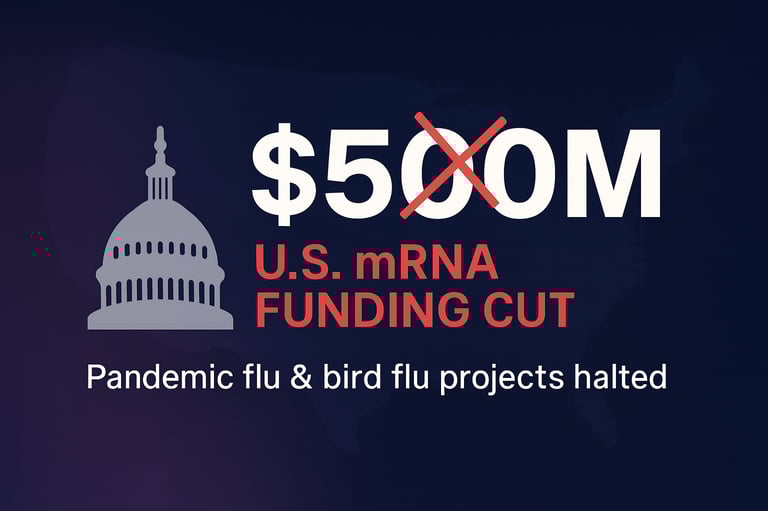
U.S. policy whiplash: HHS Secretary RFK Jr. abruptly canceled or restructured $500 million in federal mRNA contracts, including pandemic flu and bird flu projects.
Contact Us


Driving lead generation and conversion for CGT CDMOs with strategic marketing solutions.
Services
Project-Based Marketing
Part-Time Support
Fractional Leadership
Temporary Full-Time
Expertise
Lead Generation & Conversion
CGT CDMO Marketing
Digital Transformation (SEO)
Go-to-Market Strategy